Custom printed patches have become one of the most popular patch options for brands, teams, and organizations that need vibrant, detailed artwork reproduced accurately on fabric.
Unlike traditional embroidered patches, printed patches use advanced printing methods to capture full-color designs, gradients, small text, and even photo-style artwork with remarkable precision. For businesses and individuals searching for a patch style that does not compromise on visual detail, custom-printed patches are often the ideal solution.
This guide walks through what custom printed patches are, when they are the right choice for your project, how they compare to other patch types, and what factors affect their cost and durability.
Whether you are designing logo patches for a clothing brand, promotional patches for an event, or full-color printed patches for a sports team, this guide will help you make an informed decision.
What Are Custom Printed Patches?
Custom printed patches are fabric patches created using a printing process rather than traditional needle-and-thread embroidery. The most common method used for these patches is dye sublimation, a process where ink is heat-transferred directly into the fabric fibers. This creates a smooth, flat finish rather than the raised, textured look associated with embroidered patches.
Because the design is printed rather than stitched, printed patches can reproduce an almost unlimited color palette. There are no thread color limitations, no stitch density concerns, and no minimum line thickness required to keep small details visible. This makes printed patches particularly well suited for designs that rely on subtle color transitions, fine detail, or complex artwork that would be difficult or impossible to replicate with embroidery thread.
The surface of a printed patch is smooth to the touch, similar to a printed fabric label, while the edges are typically finished with a merrowed border or a heat-sealed edge depending on the shape and size of the patch. This gives printed patches a clean, modern look that pairs well with contemporary apparel and merchandise.
When Should You Choose Printed Patches?
Not every design is suited to every patch type. Custom printed patches shine in situations where visual accuracy and color complexity matter more than texture. Consider printed patches when your project involves any of the following.
Detailed logos: If your logo includes intricate line work, small icons, or layered graphic elements, printed patches will reproduce those details far more accurately than embroidery.
Small text: Text smaller than a certain point size often becomes illegible when embroidered, since thread cannot form crisp, thin letterforms. Printed patches can render small text cleanly because ink does not have the same physical limitations as thread.
Photo-style artwork: Designs that resemble photographs, such as realistic imagery, shading, or detailed illustrations, are best suited to printing rather than embroidery.
Gradient colors: Smooth color transitions and gradients are extremely difficult to achieve with thread but are simple to reproduce with dye sublimation printing.
Promotional events: Event organizers often need patches quickly and custom full color patches to match branded materials, making printed patches a practical and visually consistent choice.
Brand merch: Clothing and lifestyle brands frequently choose printed patches to match digital branding exactly, since ink colors can be matched more precisely to a brand’s color codes.
Lightweight clothing: Because printed patches lie flatter than embroidered patches, they work well on lightweight fabrics like performance wear, caps, and thin jackets where a heavy embroidered patch might feel bulky.
Printed Patches vs Embroidered, Woven, and PVC Patches
Each patch type has strengths depending on the design and application. Below is a brief comparison to help you decide which style fits your project. For a more detailed breakdown, read our full comparison guide covering embroidered, woven, printed, and PVC patches.
| Patch Type | Best For | Texture | Color Range |
| Printed Patches | Detailed logos, gradients, small text, photo-style art | Smooth, flat | Full color, unlimited |
| Embroidered Patches | Classic, textured designs with bold outlines | Raised, textured | Limited to thread colors |
| Woven Patches | Fine detail with a flat, woven finish | Flat, woven texture | Moderate, limited by thread |
| PVC Patches | Outdoor gear, tactical apparel, 3D effects | Rubberized, raised | Full color, unlimited |
Since this section is meant to give a quick overview rather than a complete analysis, visit our dedicated comparison article if you want a deeper look at how each patch type performs in terms of durability, cost, and application.
Best Uses for Custom Printed Patches
Custom printed patches are versatile enough to serve a wide range of industries and purposes. Common applications include the following.
Clothing brands: Streetwear and apparel labels often use printed patches to add branded graphics to jackets, hats, and bags without the bulk of embroidery.
Events: Conferences, festivals, and community gatherings use printed patches as commemorative items or as part of staff and volunteer uniforms.
Schools: Schools use printed patches for spirit wear, club merchandise, and achievement awards where full-color mascots or crest designs are important.
Sports teams: Teams use printed patches for jerseys, warmup gear, and fan merchandise, especially when team logos include gradient colors or fine detail.
Promotional giveaways: Businesses distribute printed patches at trade shows and marketing events as low-cost, high-visibility branded items.
Logo patches: Companies looking for logo patches that match their exact brand colors often choose printed options for the most accurate reproduction.
Artist merch: Musicians and independent artists use printed patches to sell detailed, illustration-heavy designs as part of their merchandise lineup.
What Backing Works Best for Printed Patches?
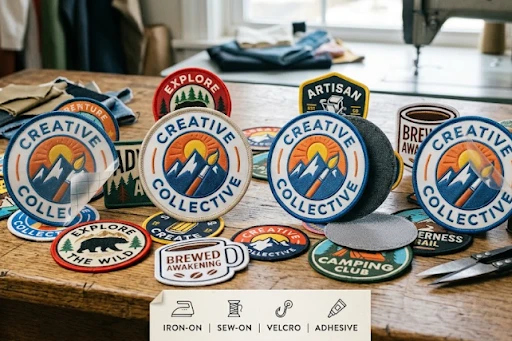
The backing you choose affects how your printed patch is applied and how long it will hold up. Common backing options include the following.
Sew-on backing: This is the most durable custom option and is recommended for items that will be washed frequently or worn under demanding conditions.
Iron-on backing: A heat-activated adhesive layer backing allows the patch to be applied with a household iron. This is convenient for lighter use but is generally less durable than sewing.
Velcro backing: Velcro backing allows patches to be removed and swapped easily, which is popular for tactical gear, uniforms, and modular apparel.
Adhesive backing: Where available, a peel-and-stick adhesive backing offers a temporary bonding option, useful for short-term promotional use rather than long-term wear.
Choosing the right backing depends on how the patch will be used and how long it needs to last. If you are unsure which backing suits your project, our team can walk you through the options when you request your quote.
Are Printed Patches Durable?
Printed patches, when produced using quality dye sublimation techniques, are built to withstand regular use. That said, understanding their care requirements will help you get the most out of them.
Washing and care: Printed patches generally hold up well to machine washing, though washing on a gentle cycle and avoiding high heat during drying will help preserve color vibrancy over time.
Fading: Like most printed or dyed materials, prolonged direct sunlight exposure and repeated high-heat washing can cause gradual fading. This is a normal characteristic of printed fabric goods rather than a defect.
Long-term use: For patches that will see heavy daily wear, such as uniforms or work apparel, sew-on backing combined with proper washing habits will extend the patch’s lifespan significantly.
Best use cases: Printed patches are best suited to apparel, merchandise, and promotional items that receive normal to moderate wear. For extremely rugged outdoor or tactical applications, PVC patches may offer additional resistance to abrasion and weather exposure.
How to Prepare Artwork for Printed Patches
The quality of your final printed patch depends heavily on the quality of the artwork submitted. Following these guidelines will help ensure a sharp, accurate result.
High-resolution files: Always submit artwork at the highest resolution available. Low-resolution images can appear blurry or pixelated once printed at patch size.
Clear colors: Clearly defined color values, ideally in CMYK or Pantone references, help ensure the printed colors match your intended design as closely as possible.
Avoid blurry logos: If your logo file appears blurry or compressed on screen, it will likely print the same way. Request a clean, original file from your designer whenever possible.
File formats: Vector files such as AI, EPS, or PDF are preferred because they scale without losing quality. High-resolution PNG files are also acceptable if a vector file is not available.
For a complete breakdown of accepted file types and artwork specifications, read our detailed guide on preparing artwork for custom patches.
How Much Do Custom Printed Patches Cost?
Custom printed patch pricing depends on several factors, and understanding them will help you budget accurately for your order.
Size: Larger patches require more material and printing area, which increases cost per unit.
Quantity: As with most custom manufacturing, larger order quantities typically reduce the per-patch price.
Backing: Certain backing types, such as Velcro, may add a small cost compared to standard sew-on or iron-on options.
Border: Border style and finishing, such as a merrowed edge versus a heat-cut edge, can affect the final price slightly.
Artwork complexity: While printed patches handle complex artwork well, extremely intricate designs with many fine details may require additional production time.
For a full pricing breakdown with example price ranges, contact our team of experts for a dedicated custom patch pricing guide.
Frequently Asked Questions
Are printed patches better than embroidered patches?
Neither option is universally better, since each is suited to different types of designs. Printed patches are better for detailed logos, gradients, small text, and photo-style artwork because they are not limited by thread thickness or color availability. Embroidered patches, on the other hand, offer a classic textured look and tend to perform well with bold, simple designs and outlined lettering.
Can printed patches have photos?
Yes, photo-style printed patches can reproduce photo-style artwork with a level of detail that embroidery cannot match. Because dye sublimation printing applies ink directly into the fabric rather than building an image with thread, it can capture shading, gradients, and fine detail found in photographs or realistic illustrations. This makes printed patches a strong choice for designs that include portraits, detailed scenery, or any artwork with photographic qualities that need to be preserved on the final patch.
Do printed patches fade?
Printed patches can experience gradual fading over time, particularly with prolonged sun exposure or repeated washing at high temperatures. This is a normal characteristic of printed fabric goods rather than a manufacturing flaw. To minimize fading, we recommend washing patches on a gentle cycle with cold water and avoiding direct high heat during drying. With reasonable care, printed patches maintain their color vibrancy well throughout normal use in apparel and merchandise applications.
Can I iron on printed patches?
Yes, many customized printed patches USA can be manufactured with iron-on backing, which allows for simple application using a household iron and proper heat settings. Iron-on backing is convenient for lighter use cases, though it is generally less durable over time than sew-on backing, especially for items that will be washed frequently. If you need a printed patch for long-term or heavy-use apparel, we recommend choosing sew-on backing instead or combining iron-on with a few reinforcing stitches for added durability.
What is the best file format for printed patches?
Vector file formats such as AI, EPS, or PDF are the preferred choice for custom printed patches because they scale to any size without losing image quality. High-resolution PNG files are also acceptable when a vector file is not available, provided the resolution is high enough to avoid blurriness at the final patch size. Avoiding low-resolution or heavily compressed image files will help ensure your finished printed patch matches your original design as closely as possible.
Are printed patches good for small text?
Yes, printed patches for small text are one of the best options available for designs that include small text. Because the design is applied through printing rather than stitched with thread, there is no minimum thread thickness limiting how small the lettering can be. This means printed patches can reproduce fine print, small taglines, or detailed text elements clearly, whereas the same text embroidered with thread might blur together or become illegible at a small size.
Order Your Printed Patches from The American Patch
The American Patch specializes in helping businesses, teams, schools, and individuals across the United States bring their custom patch designs to life. Our custom print embroidery services combine full-color printing capability with the craftsmanship expected from a dedicated USA-focused patch manufacturer.
When you order with us, you receive a free digital proof before production begins, ensuring your design is exactly right before we move forward. We offer multiple patch types, including custom printed patches, custom embroidered patches, custom woven patches, and custom PVC patch options, so you can choose the style that best fits your project rather than being limited to a single production method.
Ready to get started? Request your free instant quote by contacting us today, and our team will help you turn your artwork into a finished custom printed patch.