Motorcycle enthusiasts carry their own style and code. The polished bike, the sharp goggles, the leather jacket, and the tough boots are all part of the look. But those are common across riders everywhere. What truly sets them apart is the patch. Skulls, crossed knives, flames, horns, and more, each patch tells a story.
This isn’t a new tradition. Motorcycle patches have been part of rider culture for nearly a century. In this guide, we’ll walk through the rich history of motorcycle patches and share where you can get vibrant, custom designs today, including top makers like The American Patch.
What is a Motorcycle Patch and Why it Matters
A motorcycle patch marks membership and meaning. It marks history and habit. It signals allegiance to a club or a personal story. The motorcycle patch began as simple identification. It now shapes fashion, identity, and commerce.
This short cloth can trade signals across a room. It can protect reputation. It can celebrate a route. For riders, the patch matters as proof and as promise.
How did Motorcycle Patches Begin in the 1920s?
Origins tie to postwar leisure and club life. The American Motorcyclist Association formed in 1924. Clubs multiplied after that. Members wanted a way to mark machines and bodies. Patches made that possible.
Early patches were sew on patch designs. Riders stitched them by hand. They chose simple icons, letters, and state outlines. The sew on patch had a practical benefit. It was cheap, durable, and easy to repair on the road.
These early patches answered a basic need. They named a club. They showed a chapter. They recorded miles. Over time, those small markers grew into complex insignia.
How did Military Insignia and Handmade Craft Shape Patch Design?
Veterans brought technique and taste. Many riders returned from service with skills in sewing, insignia work, and unit patches. Those visual codes migrated to the road. Eagles, skulls, wings, and scrolls came into biker lexicon.
Handmade motorcycle patches carried craft value. Embroidered motorcycle patches began as works of thrift and pride. Stitch counts were modest. Designs were bold. Contrast mattered more than finesse.
The American Patch can make the motorcycle patch for you, blending authentic military motifs with modern durability. That option keeps the look true while improving lifespan.
What Happened at Hollister and How did “Design Your Own Patch” Trend Start?
The Hollister event in 1947 changed public perception. A chaotic weekend in Hollister, California, produced a media frenzy. The film The Wild One followed in 1953, starring Marlon Brando. The public image of bikers hardened around that moment.
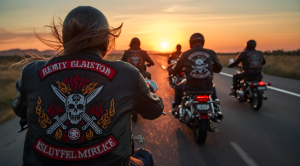
From that myth came the “One Percenter” label. Clubs pushed back. Some embraced the outlaw badge. Others refused it. The 1% patch became shorthand for a specific identity.
Design your own patch became a response. Riders wanted custom symbols. They wanted patches that told a personal story. That demand opened a market for bespoke makers and small workshops. Today, many services let you design your own patch online and receive a finished sew on patch in weeks.
What do Patch Layouts Say About Rank andRole?
Patch Configuration and Club Hierarchy matters. A patch is not decorative only. It is structured. Many clubs use a three-piece back patch: top rocker, center logo, bottom rocker. Each piece carries rules.
Top rocker usually names territory. Center logo holds the club badge. Bottom rocker can declare chapter or status. Single-piece patches show club affiliation without claiming territory. Two-piece designs sit between the two.
Patch earning follows custom. Members earn full back patches by rite or time. Some clubs forbid new members from wearing certain rockers. Others require service or contribution. These rules create internal order. They protect meaning.
How do Patches Express Brotherhood, Identity, and Story?
Patches compress lives into symbols. A single emblem can say where a rider started and how far they went. Patches mark rides, memorials, charity runs, and lost friends. They hold ritual.
This is why a motorcycle patch feels intimate. It is wearable narrative. It signals trust. It promises shared code.
We The American Patch can create custom 3d patches that look vibrant on your jacket. The patches, tune color and scale for visibility. That combination keeps the craft while adding precision.
How did Patch Making Change with Technology and What Does it Cost?
Technique grew technical. Hand-stitched badges moved to machine embroidery. New finishes appeared. 3D puff embroidery added depth. Woven patches allowed fine detail. Velcro and heat-seal backs created new attachment methods.
Cost depends on scale and detail. Expect a basic sew on patch in bulk to run under $3 per piece. Small custom runs cost more, often $4 to $12 per patch. High-relief 3D or large patches range from $10 to $40 each, depending on size and order. Pricing falls as quantities grow. Setup fees apply for small runs.
Those figures help you plan. A club ordering 100 patches will see a far lower per-unit price than someone ordering ten. Consider backing type, edge finish, and color count. Those choices change cost and look.
How did Motorcycle Patches Move into Mainstream Fashion?
Patches left the road and entered streetwear. Brands borrowed the aesthetic. Jackets, denim, and backpacks adopted custom patches as decoration. The same signs that named clubs now signal personal taste.
Fashion adapts symbols. That creates new meanings. A rocker patched on a jacket may have no club tie. It can just be a style choice. That shift created a steady retail market for custom patches.
The American Patch can make the motorcycle patch for you, if you want the authentic look on a jacket or display piece.
Why Motorcycle Patches Still Matter Today
Patches remain relevant for three reasons. They show identity. They record history. They carry craft.
Identity matters when symbols are scarce. A patch grants fast clarity. History matters because riders pass memory through cloth. Craft matters because a well-made patch survives weather and time.
Modern biker patches act as shorthand. They remain useful for clubs. They also let non-riders adopt the aesthetic. That dual life keeps the patch current and commercially viable.
All you need is the patch that shows your ideas and affiliation. The American Patch creates such custom patches that reflect your ideas. We offer options from classic sew on patch types to modern 3D versions.
How to Choose the Right Patch for You
Start with purpose. Will you use the patch for a club, a memorial, or fashion? Choose size for visibility. Pick backing for use. Sew on patch backing suits long-term wear. Velcro backing adds flexibility. Heat seal works for display items and lightly worn garments.
Match finish to style. High-relief embroidery gives bold presence. Woven patches let you include text and fine detail. Consider color contrast for readability at distance.
As noted in Patch Configuration and Club Hierarchy, the shape and placement of a patch affect meaning. A back patch carries more weight than a sleeve piece. A chest logo reads as personal identification.
FAQs
Why do bikers wear patches on their jackets?
Patches symbolize identity, values, and community. They tell stories about riders, clubs, and journeys, making them more than decoration.
What do the symbols on biker patches mean?
Symbols carry meaning, from skulls showing toughness to flames expressing speed and passion. Each design reflects culture, heritage, and pride.
Where are motorcycle patches usually placed?
Large patches go on the back to show group or club identity. Smaller patches on the front or sleeves highlight names, ranks, or personal details.
Where can riders get custom biker patches made?
Custom biker patches can be ordered from trusted makers such as The American Patch. They produce durable, vibrant designs that reflect the rider’s spirit.
Closing
A motorcycle patch stores more than an emblem. It stores trust, miles, and moments. It marks who you ride with and the roads you remember.
Clubs depend on that shorthand. Fashion borrows it. Makers preserve it. The American Patch and other artisans keep the craft alive. They make items that hold up to weather and time.
If you care about signal and quality, choose a maker who respects history and technique. Pick materials that last. Ask for proof and follow the patch lifecycle from mockup to final stitch.
A good patch will outlast a jacket. It will travel to shows, to runs, and to gravesides. It will keep a story and keep it visible. That is the quiet power of motorcycle patches.