Army Patches Meaning: Types, Symbols, Placement & Custom Patch Guide
Every army patch has a story. What may look like a small piece of fabric, thread, rubber, or color can carry a deeper meaning about identity, service, rank, unit, mission, achievement, and pride.
That is the real meaning behind army patches. They are not just decorative items placed on uniforms, jackets, bags, or tactical gear. Army patches help show who someone belongs to, what role they have, what they have earned, and sometimes where they have served.
From official shoulder sleeve insignia to combat patches, rank patches, name tapes, flag patches, morale patches, and custom military-style designs, each patch has a purpose. Some patches represent official military identity, while others are created for collectors, veterans, tactical teams, outdoor groups, airsoft teams, businesses, and personal expression.
In this guide, we will explain army patches meaning in a simple way, including the most common patch types, symbols, placements, and custom patch options.
What Do Army Patches Mean?
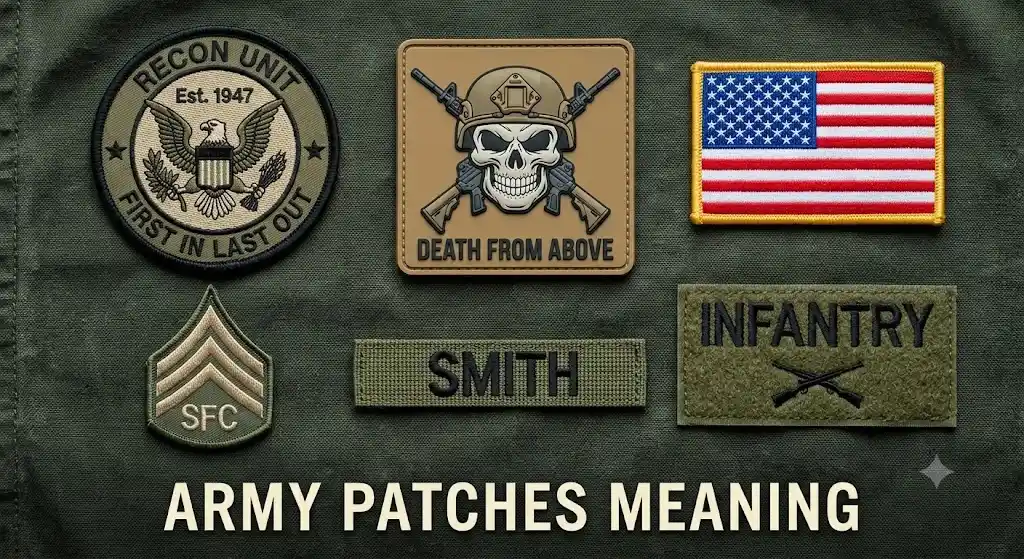
Army patches usually represent identity, unit, rank, achievement, qualification, service history, or group pride. In simple words, army patches help tell a visual story.
A patch can show:
- A soldier’s unit or command
- Rank and responsibility
- Branch or service identity
- Special skills or qualifications
- Deployment or combat service
- National identity
- Team culture or morale
- Historical unit pride
- Custom group or brand identity
The meaning depends on three main things: what the patch shows, where it is placed, and whether it is official, collectible, morale-based, or custom-made.
For example, a shoulder patch may represent a unit. A rank patch may show leadership level. A name tape identifies the wearer. A combat patch can represent service in qualifying hostile conditions. A morale patch may show humor, team culture, or personal identity.
This is why army patches are important to soldiers, veterans, collectors, tactical teams, and anyone interested in military-inspired patch design.
A Short History of Army Patches
Military symbols have existed for centuries, but fabric army patches became especially important during modern warfare when units needed a quick way to identify each other.
During World War I, shoulder sleeve insignia became more common in the U.S. Army. One of the most famous early examples is the 81st Infantry Division’s wildcat symbol, which helped make unit patches a recognizable part of military identity.
By World War II, patches were not only practical identifiers. They had become symbols of pride, brotherhood, mission, history, and sacrifice. Soldiers wore unit patches, division patches, and specialty insignia that helped show their connection to a larger story.
Today, army patches are used in many ways. Some are official military uniform patches. Some are collected as historic items. Some are made for veteran groups. Others are custom military-style patches used by tactical teams, security crews, airsoft groups, outdoor brands, and businesses.
The core idea remains the same: a patch turns identity into something visible.
Army Shoulder Patches Meaning
When people search for army patches meaning, they are often trying to understand army shoulder patches. These are commonly known as shoulder sleeve insignia, or SSI.
An army shoulder patch usually represents the soldier’s current unit, division, brigade, command, or organization. The design may include symbols connected to the unit’s history, mission, location, role, or values.
Common symbols found on shoulder patches include:
- Eagles for freedom, leadership, vigilance, and national pride
- Shields for protection, strength, and defense
- Swords for courage, combat readiness, and military strength
- Stars for honor, authority, guidance, or history
- Arrows for movement, direction, and strategy
- Lightning bolts for speed, power, communication, or rapid action
- Animals for courage, toughness, loyalty, or unit personality
A shoulder patch may look simple from a distance, but the colors, shape, symbols, and motto can carry years of history.
Left Shoulder vs Right Shoulder Patch Meaning
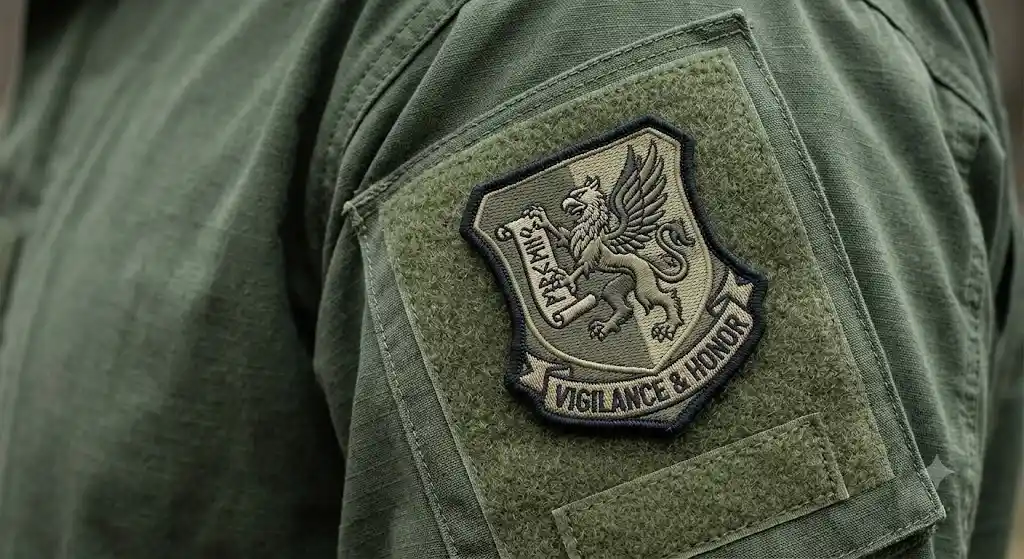
Patch placement matters. On U.S. Army uniforms, the left shoulder is commonly associated with the current unit patch, while the right shoulder may be associated with a combat patch or former wartime service patch, depending on the uniform and regulation context.
This is one of the most important differences to understand.
A patch on the left shoulder often tells you where the person is currently assigned. A patch on the right shoulder can carry a deeper meaning because it may represent service with a unit during qualifying hostile conditions or deployment.
For collectors and civilians, this placement helps decode the story behind a uniform or display. For custom patch buyers, it also shows why placement matters in military-inspired design.
If a patch is being made for official uniform use, current military regulations should always be followed. For custom gear, jackets, backpacks, and morale patches, placement is more flexible, but the design should still be respectful.
Combat Patch Meaning
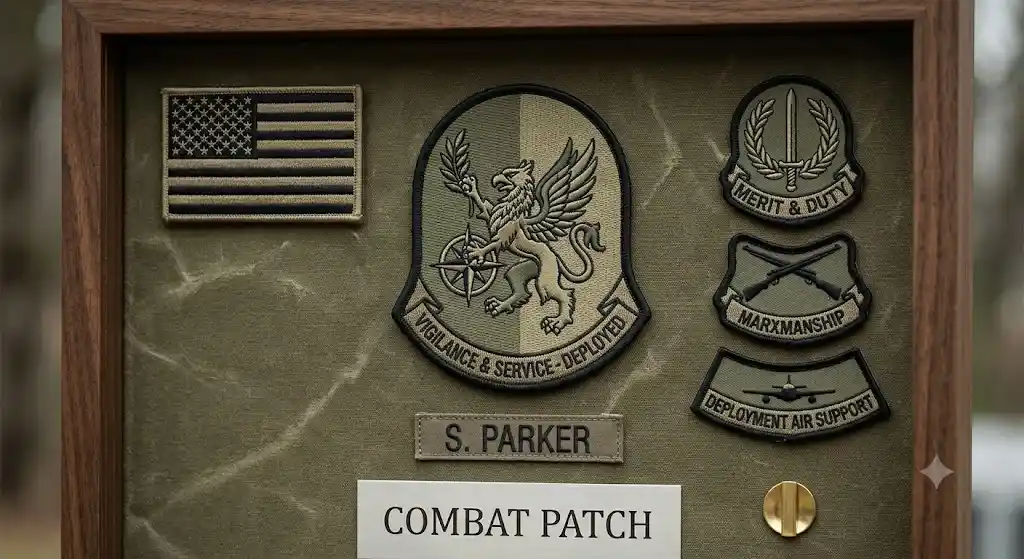
A combat patch is one of the most meaningful types of army patches. It is not just another shoulder patch. It is connected to deployment, hostile conditions, and service experience.
For many soldiers, a combat patch represents sacrifice, shared hardship, and connection to the people they served with. It can become a visible reminder of a specific mission, deployment, or chapter of service.
This is why combat patches are deeply respected by veterans, military families, and collectors. They are not only about design. They represent experience.
In custom patch design, this is an important lesson: the most powerful patches are not always the most complicated. They are the ones connected to a real story.
U.S. Flag Patch Meaning
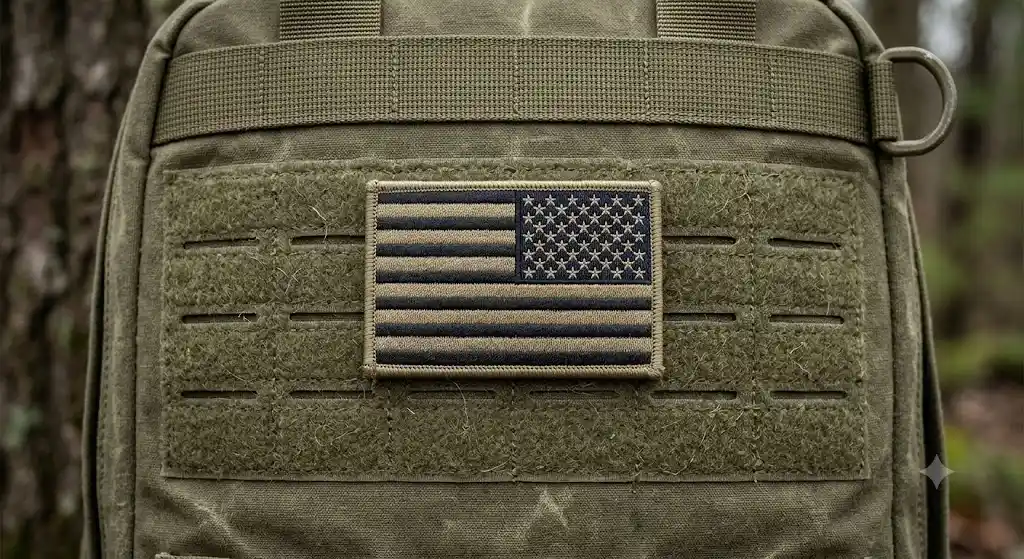
The U.S. flag patch is one of the most recognized military patches. Many people notice that the flag sometimes appears reversed on the right shoulder and wonder if it is wrong.
It is not a mistake.
The reversed U.S. flag patch is designed so the star field faces forward. The idea is that the flag appears to be moving forward as the wearer moves forward. It gives the impression of carrying the flag into action, not retreating.
This is why the right-shoulder flag patch may look different from a normal flag image. It has symbolic meaning connected to movement, courage, and forward direction.
For custom military-inspired patches, flag-style designs are popular, but they should be used respectfully. If you are creating a custom U.S. flag patch, keep the design clean, balanced, and easy to read.
Rank Patches and Chevrons Meaning
Rank patches show responsibility, leadership, and position within the military structure. They help identify the wearer’s level of authority.
Many enlisted rank patches use chevrons, rockers, stars, diamonds, or other symbols. To someone familiar with the system, these marks can quickly show rank and responsibility.
Rank patches are practical, but they also carry respect. They represent progress, experience, leadership, and earned position.
For custom patch design, rank-style elements should be used carefully. If the patch is for a civilian team, brand, or event, avoid designs that falsely suggest real military rank or official status.
Name Tapes and Branch Tapes
Name tapes and branch tapes are among the most direct military identifiers.
A name tape usually shows the wearer’s last name. A branch tape identifies the service branch, such as U.S. Army. These patches are functional because they make identification easier in training, operations, and daily uniform use.
Outside official military use, custom name tapes are also popular for:
- Tactical teams
- Security staff
- Airsoft teams
- Work uniforms
- Outdoor crews
- Backpacks
- Jackets
- Team gear
- Event staff uniforms
Custom name patches are simple, useful, and easy to read. They are one of the best options for anyone who wants a military-inspired patch with a practical purpose.
Special Skill and Qualification Patches
Some army patches and tabs represent training, qualifications, and specialized skills. These patches are respected because they are earned through performance, discipline, training, and service.
Examples may include tabs, badges, or insignia connected to special training or qualifications. These designs are meaningful because they represent achievement, not just style.
For collectors, these patches can be historically interesting. For custom patch buyers, they show how powerful a simple design can become when it is connected to real accomplishment.
If you are creating a custom military-inspired patch, you can use this idea without copying official insignia. Create original symbols that represent your own team’s skill, mission, or values.
Morale Patches Meaning
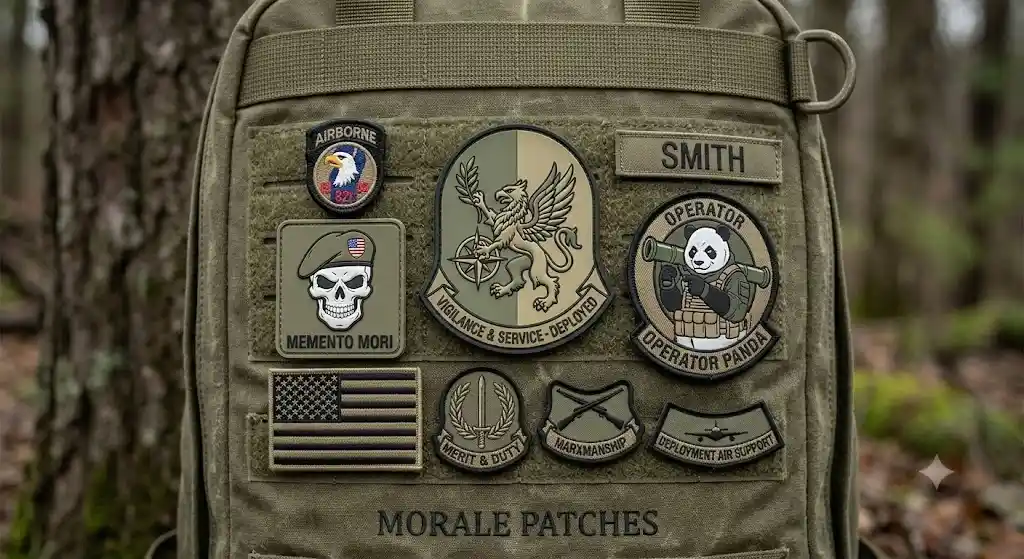
Morale patches are different from official army patches. They are often unofficial, expressive, funny, symbolic, tactical, or team-based.
A morale patch may include:
- Funny quotes
- Tactical slogans
- Call signs
- Team mascots
- Skull artwork
- Animal symbols
- Mission jokes
- Flag designs
- Motivational phrases
- Pop culture-inspired artwork
- Inside jokes
- Unit or group humor
Morale patches are popular because they let people show personality. They are commonly used on tactical backpacks, plate carriers, range bags, jackets, hats, and patch boards.
Many civilians also love morale patches because they are removable, collectible, and easy to swap. They are popular with outdoor groups, airsoft players, security teams, event crews, motorcycle clubs, and brands that want a bold tactical look.
Call Sign Patches Meaning
Call sign patches identify a person, nickname, role, or team function. They are common in tactical-style groups, aviation-inspired designs, range teams, training environments, and custom gear.
A call sign patch can be serious, funny, or personal. It may include a nickname, initials, role, number, or small symbol that only the group understands.
Call sign patches work well for:
- Tactical teams
- Security crews
- Airsoft teams
- Outdoor groups
- Event staff
- Veteran groups
- Adventure clubs
- Corporate team-building kits
- Custom backpacks and jackets
The best call sign patches are short, bold, and easy to read from a distance.
Official Army Patches vs Custom Military Patches
Not every military-style patch is an official army patch. This difference is important.
Official Army Patches
Official army patches are connected to real military units, regulations, rank, service, or approved insignia. These patches should be treated with accuracy and respect.
Collectible Military Patches
Collectible patches may be vintage, commemorative, surplus, replica, or display pieces. Their value can depend on history, condition, rarity, age, and unit connection.
Custom Military Patches
Custom military patches are created for teams, brands, events, tactical groups, airsoft teams, veteran organizations, outdoor clubs, security crews, and personal use.
Custom patches can look military-inspired without copying official insignia. This is usually the safest and most professional approach. You can use original symbols, colors, shapes, and text to create a strong patch that feels tactical while still being unique.
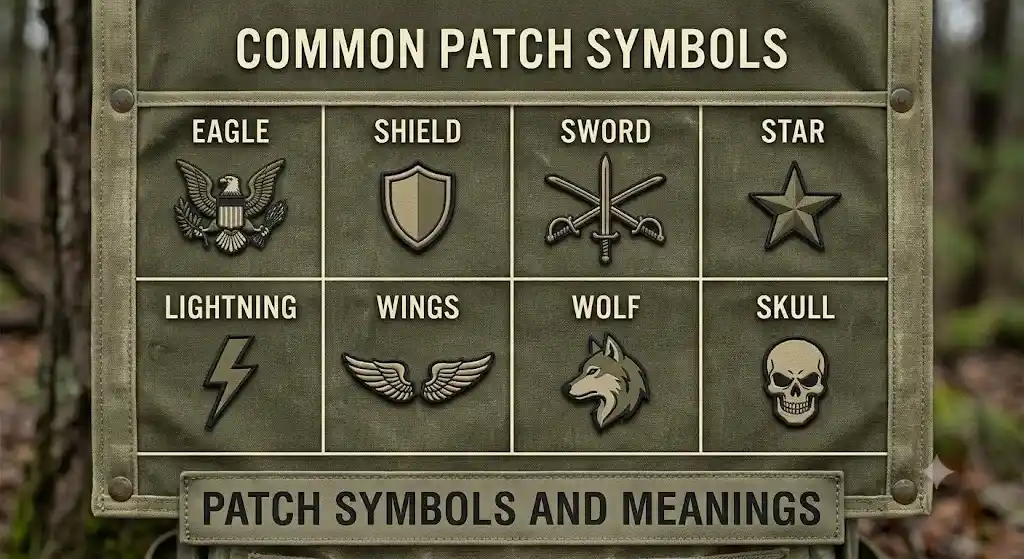
Common Army Patch Symbols and Their Meanings
Army and military-style patches often use strong symbols because they need to communicate quickly. A good patch symbol should be simple, bold, and meaningful.
| Symbol | Common Meaning |
| Eagle | Freedom, vigilance, leadership, national pride |
| Shield | Protection, strength, defense |
| Sword | Courage, combat readiness, military strength |
| Star | Honor, authority, guidance, history |
| Arrow | Movement, direction, strategy |
| Lightning bolt | Speed, power, communication, rapid action |
| Wings | Aviation, airborne movement, freedom |
| Anchor | Stability, maritime identity, strength |
| Skull | Toughness, danger, mortality, morale culture |
| Wolf | Loyalty, teamwork, endurance |
| Lion | Courage, strength, leadership |
| Tiger | Aggression, power, confidence |
| Laurel wreath | Victory, honor, achievement |
| Torch | Knowledge, guidance, leadership |
The same symbol can have different meanings depending on the patch design, unit history, color choice, motto, and context.
Types of Army and Military Patches
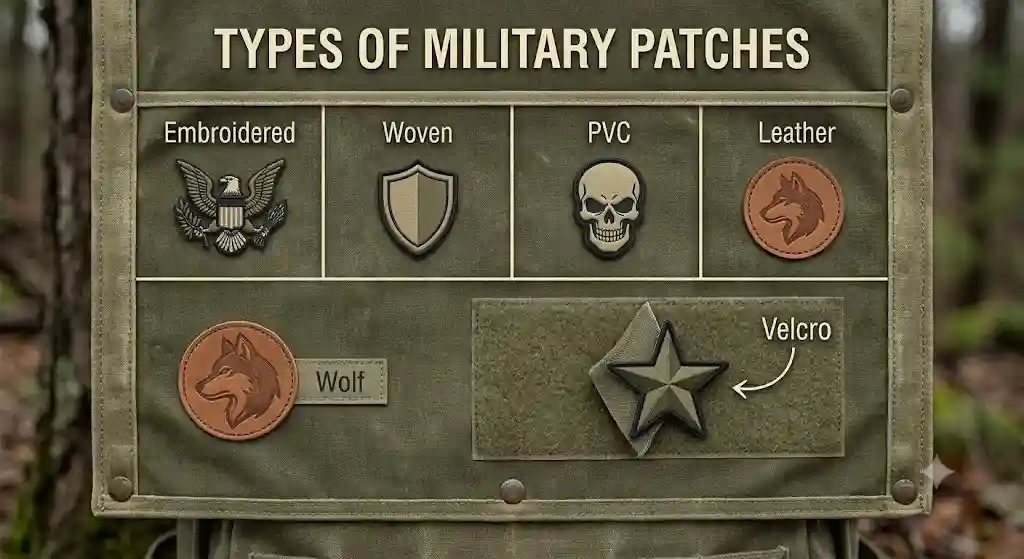
There are many types of army and military-style patches. The best type depends on the design, use, material, detail level, and backing option.
| Patch Type | Best For | Main Advantage |
| Embroidered patches | Unit-style patches, jackets, hats, names | Classic stitched military look |
| Woven patches | Small text and detailed symbols | Cleaner fine detail |
| PVC patches | Tactical gear, backpacks, outdoor use | Waterproof and rugged |
| Leather patches | Premium hats, jackets, lifestyle gear | Rugged and high-end look |
| Chenille patches | Varsity, school, award-style designs | Raised vintage texture |
| Printed patches | Full-color artwork and gradients | Best for detailed graphics |
| Velcro patches | Tactical vests, bags, morale patches | Removable and swappable |
| Sew-on patches | Permanent placement | Strong long-term attachment |
| Iron-on patches | Simple apparel use | Easy heat application |
Choosing the right patch type matters because not every design works well in every material. Small text may look better on woven or printed patches. Rugged outdoor designs may work better as PVC patches. Classic unit-style patches often look best in embroidery.
Embroidered Army Patches
Embroidered army patches are one of the most classic choices. They use thread to create a raised stitched texture that feels traditional, durable, and professional.
They work best for:
- Unit-style logos
- Name patches
- Shoulder patches
- Veteran group patches
- Jacket patches
- Hat patches
- Simple symbols
- Bold text
Embroidery gives patches a strong heritage look. It is best for designs with clean shapes, limited small details, and bold borders.
If your patch design includes very tiny letters, gradients, or complex artwork, woven, PVC, or printed patches may be a better choice.
PVC Military Patches
PVC military patches are popular for tactical and outdoor use because they are flexible, waterproof, and easy to clean. They are often used on backpacks, vests, range bags, outdoor jackets, and rugged gear.
PVC patches are best for:
- Tactical patches
- Morale patches
- Outdoor patches
- Weather-resistant designs
- 3D patch effects
- Bold logos
- Rubber-style patch designs
- Backpacks and gear
If the patch will face rain, dust, mud, or rough handling, PVC is usually a strong option. It also works well when the design needs bold colors and raised 3D details.
Woven Military Patches
Woven patches are ideal for small text, thin lines, and detailed artwork. They have a flatter surface than embroidered patches, which allows finer details to appear cleaner.
Woven patches work well for:
- Detailed crests
- Small lettering
- Thin-line symbols
- Compact name patches
- Collector-style designs
- Clean typography
If your design has small details that may not stitch well in embroidery, woven patches can be a better solution.
Velcro Military Patches
Velcro military patches, also called hook-and-loop patches, are popular because they can be removed and swapped quickly.
They are commonly used on:
- Tactical backpacks
- Plate carriers
- Range bags
- Jackets
- Hats
- Morale boards
- Event uniforms
- Team gear
Velcro backing is useful when roles change, when patches need to rotate, or when the wearer wants flexibility without permanently sewing the patch onto fabric.
For custom morale patches and tactical patches, Velcro backing is one of the most popular options.
Sew-On vs Velcro vs Iron-On Military Patches
Backing type is just as important as patch material. The wrong backing can make a good patch less useful.
| Backing Type | Best For | Pros | Cons |
| Sew-on backing | Permanent uniforms, jackets, bags | Strong and long-lasting | Not removable |
| Velcro backing | Tactical gear, bags, morale patches | Removable and swappable | Needs loop panel |
| Iron-on backing | Simple apparel use | Easy to apply | Not ideal for all fabrics |
| Adhesive backing | Temporary use, displays | Quick placement | Less durable |
| Magnetic backing | Displays and metal surfaces | No sewing required | Not for fabric use |
For tactical gear and backpacks, Velcro backing is usually best. For permanent jackets and uniform-style designs, sew-on backing is more secure. For casual apparel, iron-on can work if the fabric can safely handle heat.
Where Are Army Patches Worn?
Army patches may appear in different places depending on the type of patch and its purpose.
Common placement areas include:
- Shoulder sleeves
- Chest area
- Name tape area
- Branch tape area
- Hats
- Jackets
- Backpacks
- Tactical vests
- Plate carriers
- Range bags
- Patch boards
- Shadow boxes
Official uniforms follow specific placement rules. Custom patches for civilian gear are more flexible, but the design should still look balanced and readable.
For bags and jackets, place patches where they are visible, flat, and not likely to bend too much. For tactical gear, Velcro loop panels make it easy to attach and swap patches.
How to Identify an Army Patch
If you find an army patch and want to understand its meaning, start by studying the design carefully.
Look at:
- The patch shape
- The main symbol
- The colors
- Any letters, numbers, or motto
- Whether it has a tab
- Whether it looks official, morale-based, or custom-made
- Where it was worn
- The material and age
- Any unit or branch references
A shield shape may suggest protection or defense. Wings may suggest aviation or airborne movement. A sword may represent readiness or combat strength. Numbers or letters may point to a unit, command, or group.
Collectors often compare patches with verified military insignia references to confirm history and authenticity.
Coolest Army Patches and Why People Like Them
People often search for the coolest army patches, but the answer depends on what they mean by “cool.”
Some people like patches because of history. Some like bold symbols. Some like rare vintage patches. Others like tactical morale designs with strong artwork.
A patch usually feels powerful when it has:
- A clear symbol
- Strong contrast
- Readable text
- A bold shape
- Real history
- Unit pride
- Clean stitching or molding
- A memorable story
The best patch designs are not always overloaded with detail. Many of the strongest military-style patches are simple, bold, and easy to recognize.
Rare and Collectible Military Patches
Some military patches become collectible because of their age, rarity, unit history, mission connection, or limited production.
Collectors may value patches based on:
- Condition
- Age
- Authenticity
- Unit history
- War or deployment connection
- Rarity
- Design variation
- Provenance
- Whether it was issued, unofficial, or handmade
Not every old patch is valuable, and not every rare-looking patch is authentic. Research is important before buying, selling, or identifying collectible military patches.
For display purposes, many collectors use patch boards, frames, albums, or shadow boxes to preserve the patches.
Custom Army Patches: Who Uses Them?
Custom army-style patches are used by many groups, not only active military units. Military-inspired patches are popular because they communicate identity, teamwork, discipline, and pride.
Custom army patches are commonly used by:
- Veteran organizations
- Tactical teams
- Security companies
- Airsoft teams
- Paintball teams
- Outdoor brands
- Motorcycle clubs
- Event staff
- Work crews
- Schools and cadet programs
- Reenactment groups
- Collectors
- Memorial projects
- Corporate team-building groups
- Sports and adventure clubs
A custom patch can represent a team, mission, role, event, brand, or shared story.
For businesses, military-style patches can create a strong, rugged brand identity. For teams, they build unity. For collectors, they become memorable keepsakes.
How Are Custom Military Patches Made?
Making a high-quality custom military patch starts with a clear design. The artwork should be readable, balanced, and suitable for the patch size.
The process usually includes:
- Artwork review
- Size recommendation
- Material selection
- Color matching
- Digitizing or mold preparation
- Backing selection
- Border selection
- Digital proof
- Production
- Quality check
- Packaging and delivery
For embroidered patches, the design is converted into stitch instructions. This process is called digitizing. It controls stitch direction, thread density, underlay, border style, and color sequence.
For PVC patches, a mold is created so the design can be produced with raised and recessed rubber-like details.
For woven patches, the artwork is converted into a flat woven design that can hold small text and thin lines more clearly than embroidery.
How to Design a Military-Inspired Patch Respectfully
Military-inspired patches can look strong, tactical, and meaningful without copying official insignia.
To design respectfully:
- Use original symbols
- Avoid copying official unit patches
- Avoid false rank or award claims
- Keep the text readable
- Choose colors with purpose
- Match the material to the use case
- Keep the design simple enough for production
- Avoid suggesting unauthorized military affiliation
- Make sure the patch represents your real team, brand, or story
A good military-style patch should feel authentic, but it should still be original.
For example, instead of copying an official unit patch, a business or team can create its own shield, animal, motto, or mission symbol. This gives the patch a strong tactical look while keeping the design unique.
Best Materials for Custom Military Patches
The best material depends on where the patch will be used and how detailed the design is.
Choose embroidered patches if you want a classic stitched military look.
Choose PVC patches if you need a waterproof, tactical, rugged, or 3D patch.
Choose woven patches if your design has small text, thin lines, or detailed symbols.
Choose leather patches if you want a premium look for hats, jackets, outdoor apparel, or lifestyle branding.
Choose Velcro backing if the patch needs to be removable and swappable.
Choose sew-on backing if the patch needs to stay permanently attached.
Choose printed patches if your artwork has gradients, photo-style details, or many colors.
For most army-style and military-inspired patch designs, embroidered, PVC, woven, and Velcro patches are the strongest options.
Common Mistakes to Avoid When Designing Army Patches
A great army-style patch should look strong, clear, and meaningful. But many designs fail because they include too much detail or use the wrong material.
Avoid these mistakes:
- Adding too much small text
- Using low-contrast colors
- Making the patch too small for the artwork
- Copying official insignia
- Using thin lines in embroidery
- Choosing embroidery for highly detailed artwork
- Choosing PVC for designs that need soft thread texture
- Forgetting the backing option
- Ignoring border style
- Not checking how the patch will look from a distance
- Using too many symbols without a clear message
A strong patch should be readable, balanced, and easy to recognize. The best designs usually have one main symbol, clear text, and a strong border.
How to Order Custom Army Patches
If you want to order custom army patches or military-inspired patches, prepare the basic details first.
You should know:
- Patch size
- Patch shape
- Quantity
- Design or logo
- Preferred colors
- Patch material
- Backing type
- Border style
- Intended use
- Delivery deadline
If you are not sure which material is best, send your artwork or idea to a professional patch maker. They can recommend whether embroidery, PVC, woven, printed, leather, Velcro, sew-on, or iron-on backing will work best.
For tactical backpacks and gear, Velcro backing is usually the most practical. For jackets and uniforms, sew-on backing may be better. For outdoor use, PVC is often the strongest choice.
Why Choose The American Patch?
A military-style patch should be clean, durable, and meaningful. Poor stitching, weak backing, wrong colors, or unreadable text can ruin the final result.
At The American Patch, we create custom patches for teams, brands, organizations, collectors, tactical groups, outdoor communities, veteran groups, and businesses across the USA.
We can help you with:
- Custom army patches
- Custom military patches
- Morale patches
- Embroidered patches
- PVC patches
- Woven patches
- Velcro patches
- Name patches
- Tactical patches
- Leather patches
- Sew-on and iron-on patches
Our team helps turn your idea, sketch, logo, or reference into a professional patch with the right material, size, colors, backing, and finish.
Frequently Asked Questions About Army Patches Meaning
What do army patches mean?
Army patches usually represent identity, unit assignment, rank, qualification, service history, deployment, or military tradition. Some patches are official uniform insignia, while others are morale patches, collectible patches, or custom military-style patches.
What is army patches meaning in simple words?
Army patches meaning is about recognition. A patch can show who someone belongs to, what role they hold, what they have earned, or what story their unit or team carries.
What do shoulder patches mean in the Army?
Army shoulder patches commonly represent a soldier’s current unit, command, division, brigade, or organization. These patches are often called shoulder sleeve insignia.
What does a combat patch mean?
A combat patch is commonly connected to service in qualifying hostile conditions or combat deployment. It carries deep meaning for many soldiers and veterans because it reflects real service experience.
Why is the U.S. flag patch reversed on Army uniforms?
The U.S. flag patch may appear reversed on the right shoulder so the star field faces forward. This gives the effect of the flag moving forward as the wearer moves forward.
What are military patches called?
Military patches may be called shoulder sleeve insignia, unit patches, rank patches, name tapes, branch tapes, tabs, badges, morale patches, combat patches, or custom military patches depending on their purpose.
What do military patch symbols mean?
Military patch symbols can represent strength, protection, speed, honor, history, mission, unit pride, or identity. Common symbols include eagles, shields, swords, stars, arrows, wings, wolves, and lightning bolts.
Are morale patches official army patches?
Not always. Many morale patches are unofficial and used for humor, team identity, personal expression, tactical gear, or collecting. Official army patches follow specific regulations and authorization.
Can civilians wear army patches?
Civilians can collect, display, or wear military-inspired patches respectfully. However, they should avoid pretending to have military rank, service, awards, or official affiliation they have not earned.
What is the difference between Velcro and sew-on military patches?
Velcro military patches are removable and easy to swap, making them great for tactical gear, backpacks, and morale patches. Sew-on patches are permanently stitched and are better for jackets, uniforms, and long-term placement.
Are PVC patches good for military-style designs?
Yes. PVC patches are durable, waterproof, flexible, and ideal for tactical gear, backpacks, outdoor use, and morale patches. They are especially good for bold designs and 3D patch effects.
Are embroidered patches good for army patches?
Yes. Embroidered patches are one of the most classic choices for army-style patches. They work well for unit-style logos, name patches, shoulder patches, jackets, hats, and simple bold designs.
How do I identify an old army patch?
Look at the patch shape, symbol, colors, text, numbers, tabs, backing, and material. Then compare it with verified military insignia references or collector resources to understand its possible history.
How do I order custom army patches?
Start with your artwork, logo, sketch, or idea. Choose the size, shape, material, colors, border, backing, and quantity. A professional patch maker can help recommend the best option based on your design and use.
Final Thoughts
Army patches carry more meaning than their size suggests. They can represent identity, service, rank, unit pride, sacrifice, humor, history, and belonging. From official uniform insignia to morale patches and custom military-inspired designs, every patch tells a story.
Whether you need custom army patches, military patches, morale patches, name patches, PVC patches, embroidered patches, or Velcro-backed tactical patches, the right design can make your message clear and memorable.
At The American Patch, we help turn your idea into a high-quality custom patch made with the right material, size, colors, backing, and finish.
Ready to create your own custom army patches? Get a quote today and let The American Patch bring your design to life.